From "What Should I Build?" to Building for Myself: A Developer's Shift in Thinking
I spent years asking 'what should I build?' and going nowhere. The shift that changed everything: stop looking outward for project ideas and start solving your own problems.
21 June 2026
For a long time, I struggled with a simple but frustrating question: what should I build?
I had the technical skills, but the ideas never seemed to stick. That changed when I shifted my perspective. Instead of looking outward for inspiration, I began looking inward — at the problems I personally face. I started treating myself as my first customer, someone with real problems worth solving.
That mindset shift changed everything.
Building for Real Problems
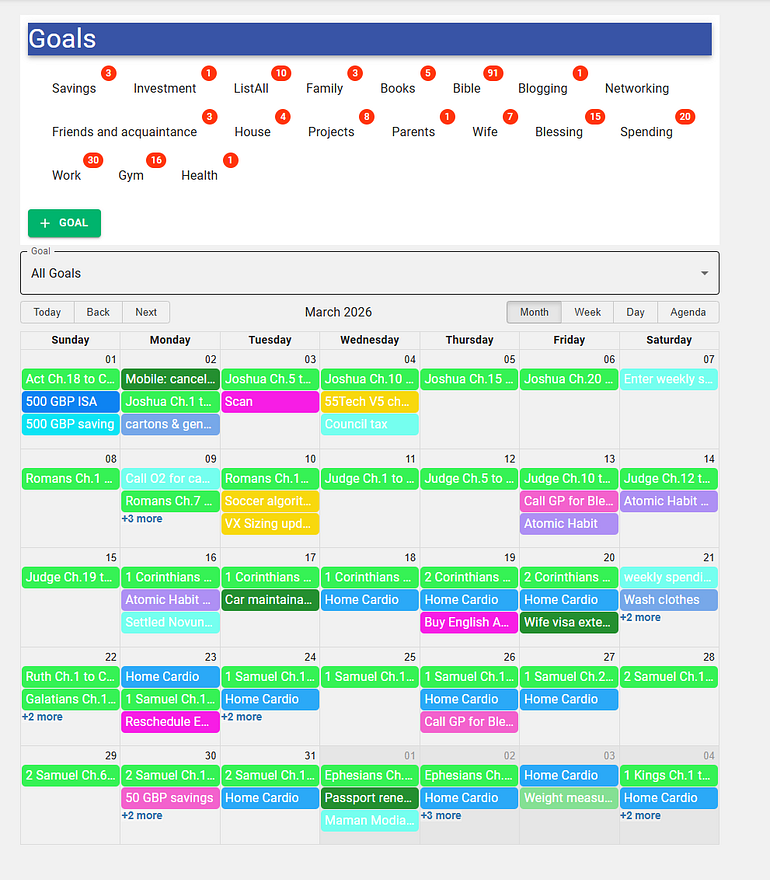
The first application I built from this approach was a tracking app — something I still use today. It solves a problem I genuinely have, which makes it valuable to me in a way that no abstract idea ever could.
I do plan to release it publicly at some point, but I’m not quite there yet. It still needs refinement, polish, and care. More importantly, I’m beginning to realise that building something for yourself is one thing — making it usable for the public is another challenge entirely.
Press enter or click to view image in full size
A Budgeting System That Changed My Perspective
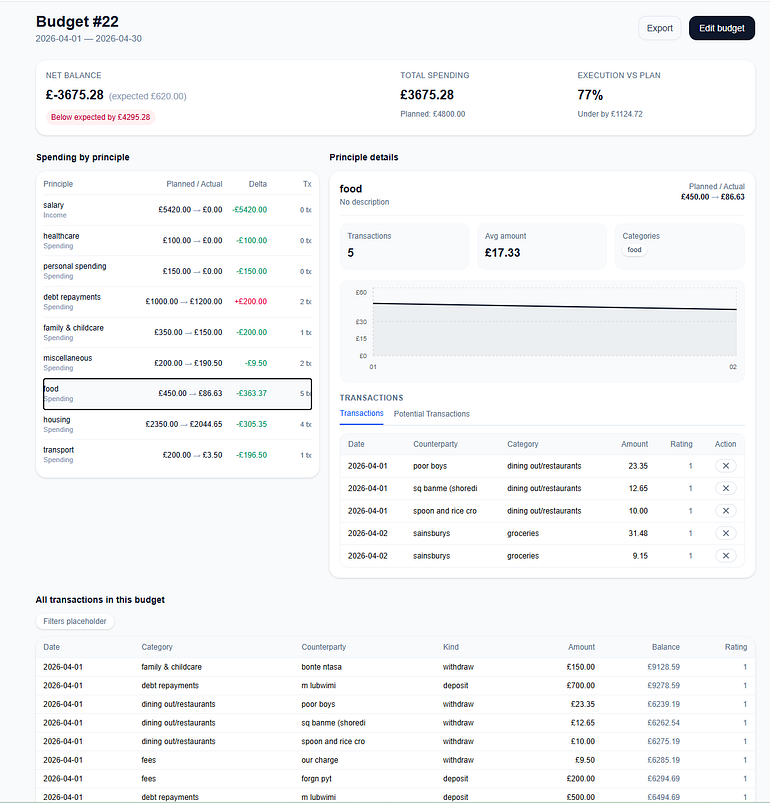
The second application I built is the one I’m most likely to release first: a budgeting system that helps track income and expenses.
This one has had a direct impact on my life.
By using it consistently, I’ve been able to identify areas where my financial planning falls short. The idea itself was inspired by various personal finance YouTube channels, but I wanted to turn those ideas into something practical — something I could interact with daily.
There’s still room for improvement, but it already delivers real value.
Press enter or click to view image in full size
The Concept of “Budgeting Labels”
One of the core ideas in the app is what I call budgeting labels.
These act as groupings within a budget and are built around “principles” — essentially categories that define how money is spent.
For example:
A principle like “Eating Out” captures all expenses related to dining out
A broader category like “Food” can group multiple related expenses
This system allows me to experiment with financial behaviours. What happens if I reduce eating out? What if I reorganise my categories? Which principles actually lead to better outcomes?
It turns budgeting into something dynamic — something you can test and learn from.
I’m also considering how ideas from books like The Psychology of Money could further shape this system.
Connecting Spending to Goals
Another key feature is the ability to match transactions — both income and expenses — to these principles.
In a sense, this bridges my bank activity with my budget. It gives me a clear picture of where I stand with my monthly financial goals.
The philosophy behind it is simple:
“He who gathers little by little makes it grow.” — Proverbs 13:11
Small, consistent actions compound over time.
A Shift in Thinking
Working on this application has changed how I think.
I’ve realised that I operate best when I think strategically:
I set a goal
I evaluate my choices based on whether they support that goal
This is very different from living without a plan — spending freely, driven only by immediate desires. That approach might feel good in the moment, but reality eventually catches up.
Resources are limited. Time is limited.
So, What Are Good Financial Principles?
This leads to an important question:
What actually counts as a good financial principle?
There isn’t a single answer.
What works for one person may not work for another. Financial principles depend on:
Personal goals
Lifestyle
Values
Circumstances
And maybe that’s the point.
The goal isn’t to find the perfect system, but to build one that works for you — and to refine it over time.
Final Thoughts
If there’s one lesson from this journey, it’s this:
The best ideas often come from your own problems.
When you build for yourself:
You understand the problem deeply
You care about the solution
You actually use what you create
And that’s a powerful place to start.
The challenge — and opportunity — is turning those personal solutions into something others can use too.